En tant qu'ingénieur d'application avec plus de 18 ans d'expérience de terrain dans le domaine du transport d'énergie, j'ai pu constater directement à quel point un système robuste est essentiel. réducteur industriel Le réducteur est au cœur de toute opération mécanique. Qu'il s'agisse d'entraîner d'immenses convoyeurs dans une installation minière ou de garantir une précision micrométrique sur des lignes d'emballage automatisées, le réducteur industriel est le héros méconnu qui détermine la disponibilité opérationnelle de l'ensemble de votre installation. Cependant, même le réducteur industriel le plus précis est soumis aux lois de la physique, du frottement et de la fatigue des matériaux.
Aujourd'hui, je vous présente les 5 stratégies de maintenance essentielles pour prolonger considérablement la durée de vie de votre réducteur industriel haute performance. Nous aborderons également les principes de fonctionnement avancés, la métallurgie et les capacités inégalées de personnalisation des réducteurs industriels proposées par [Nom de la marque]. Puissance éternelleNotre mission est de fournir aux industries mondiales — de la logistique portuaire hautement automatisée des Pays-Bas aux secteurs miniers exigeants du monde entier — des solutions de transmission de puissance intelligentes, résilientes et sur mesure.
Les 5 conseils essentiels d'entretien pour votre réducteur industriel
1. Mettre en œuvre une analyse rigoureuse de la lubrification et de la tribologie
La lubrification est essentielle au bon fonctionnement de tout réducteur industriel. Le frottement est l'ennemi absolu des dents d'engrenage. Veillez à utiliser la viscosité précise spécifiée par le fabricant, généralement ISO VG 220 ou 320 pour les applications intensives. Au-delà d'un simple contrôle visuel, effectuez régulièrement des analyses spectrographiques de l'huile. Celles-ci détectent les particules métalliques microscopiques (comme le fer ou le bronze) bien avant l'apparition d'un grincement audible, vous alertant ainsi de l'usure interne de votre réducteur industriel sur mesure.
2. Effectuer des diagnostics avancés de vibrations et d'alignement
Un défaut d'alignement entre le moteur, le réducteur industriel et la charge entraînée génère des forces radiales et axiales destructrices. L'utilisation d'outils d'alignement laser lors de l'installation est impérative. En fonctionnement, il est recommandé d'effectuer une analyse vibratoire par transformée de Fourier rapide (FFT). L'identification de pics de fréquence spécifiques permet de localiser la fatigue des roulements, un défaut d'engrènement ou un déséquilibre de l'arbre, ce qui permet de planifier une maintenance préventive et d'allonger ainsi la durée de vie du réducteur industriel.
3. Surveiller en continu les signatures thermiques
Une chaleur excessive dégrade la composition chimique de l'huile et accélère la fatigue métallurgique. Un réducteur industriel fonctionnant en permanence à plus de 85 °C (185 °F) subit des contraintes thermiques importantes. Utilisez des caméras thermographiques infrarouges ou des capteurs RTD continus pour cartographier la signature thermique du carter. Des points chauds localisés près des arbres d'entrée ou de sortie indiquent généralement une surcharge des roulements ou une défaillance du joint d'huile, nécessitant une intervention technique immédiate.
4. Garantir une intégrité irréprochable du scellé
Un réducteur industriel ne se contente pas de fuir de l'huile ; des joints endommagés permettent aux contaminants abrasifs (poussière, humidité, produits chimiques) de pénétrer dans le réducteur. Pour les environnements difficiles, comme les applications marines extérieures ou l'exploitation minière intensive, il est fortement recommandé d'opter pour des joints labyrinthes ou des joints à double lèvre en fluoroélastomère (FKM). Maintenir un environnement interne impeccable est essentiel pour la maintenance des réducteurs industriels à usage intensif.
5. Contrôler les capacités de charge et éviter les chocs
Chaque réducteur industriel est conçu avec un facteur de service spécifique. Un usage excessif et constant, au-delà de son couple nominal, provoque des micro-piqûres sur les dents d'engrenage, qui évoluent rapidement en écaillage macroscopique catastrophique. Utilisez des variateurs de fréquence (VFD) ou des démarreurs progressifs sur vos moteurs électriques afin d'éliminer les pics de couple violents au démarrage. Un réducteur industriel à accélération progressive durera des décennies de plus qu'un réducteur soumis à des chocs importants.
Le cœur de l'ingénierie : Principes de fonctionnement et matériaux avancés
Pour maîtriser la maintenance des réducteurs industriels à forte puissance, il est essentiel de comprendre leur fonctionnement interne. La fonction principale d'un réducteur industriel est de convertir la rotation à grande vitesse et faible couple d'un moteur primaire (comme un moteur électrique) en une sortie à faible vitesse et couple élevé. Ceci est réalisé grâce à des rapports d'engrenage spécifiques, qui engrènent des engrenages de différentes tailles. La transmission de puissance cinématique s'effectue au niveau de la ligne primitive des dents, une zone de contact fortement sollicitée où coexistent frottement de roulement et frottement de glissement.
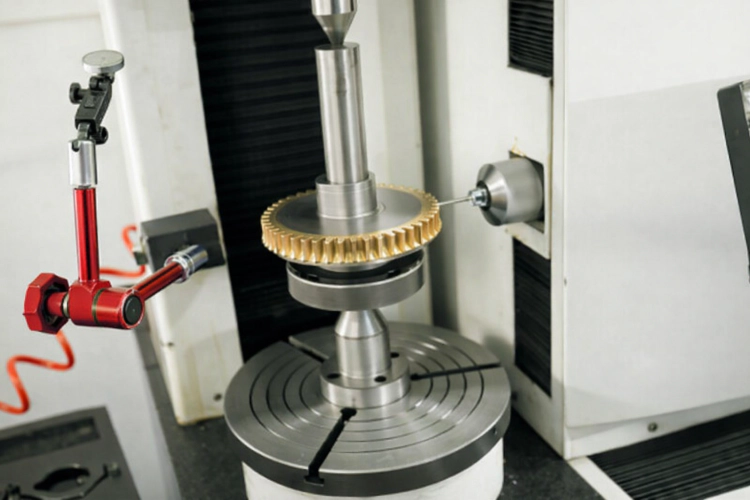
À Puissance éternelleL'intégrité structurelle de nos réducteurs industriels commence au niveau moléculaire. Nous utilisons principalement des aciers alliés à faible teneur en carbone de première qualité. 20CrMnTi ou 17CrNiMo6Ces pièces forgées subissent un traitement de cémentation gazeuse et de trempe rigoureusement contrôlé. Il en résulte une dent d'engrenage dotée d'une couche externe exceptionnellement dure et résistante à l'usure (58-62 HRC) entourant un noyau interne robuste et ductile, capable d'absorber des chocs de torsion considérables sans se briser. Après ce traitement thermique, nos engrenages sont rectifiés avec précision par commande numérique (CNC). Nous appliquons des modifications microgéométriques spécifiques, telles que le dégagement et le bombage des dents, afin de garantir un centrage parfait de la zone de contact, même lorsque l'arbre se déforme sous des charges extrêmes.
Ever Power : Votre partenaire en solutions de réducteurs industriels sur mesure
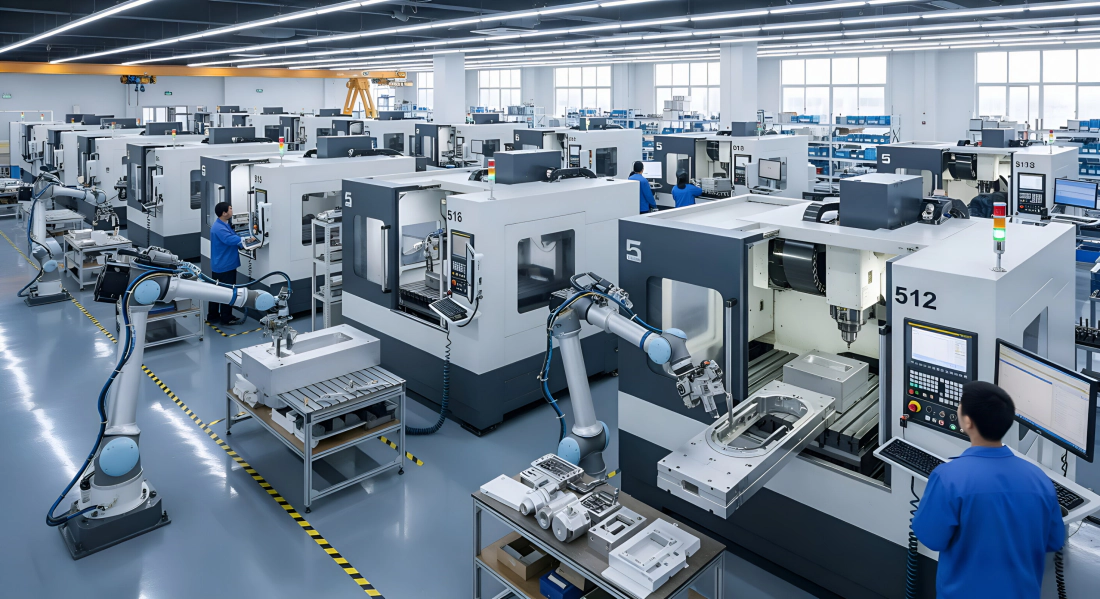
Les unités de transmission standard disponibles sur le marché ne répondent souvent pas aux exigences spatiales et cinétiques complexes des machines modernes. C'est là qu'Ever Power excelle. Nous ne sommes pas seulement un fabricant ; nous sommes un partenaire d'ingénierie de pointe offrant des solutions inégalées. réducteur industriel sur mesure capacités. Nous comprenons qu'un client qui conçoit une plateforme éolienne offshore aux Pays-Bas a des besoins très différents de ceux d'un client qui construit une sucrerie en Amérique du Sud.
Notre processus de personnalisation est entièrement flexible et hautement collaboratif. Que vous ayez besoin d'un réducteur compact et adaptable pour moderniser un équipement existant sans modifier le châssis, de revêtements marins anticorrosion spécifiques, de rapports de réduction fractionnaires non standard ou de sorties à arbre creux avec disques de serrage intégrés, notre équipe d'ingénieurs concrétise votre projet. Grâce à la modélisation CAO 3D avancée et à l'analyse par éléments finis (FEA), nous simulons les contraintes réelles sur votre réducteur industriel personnalisé avant même la découpe de la première pièce d'acier, garantissant ainsi une fiabilité absolue dès sa mise en service.
Spécifications techniques et architecture des matériaux
Le tableau ci-dessous présente les critères techniques rigoureux qui définissent un réducteur industriel à couple élevé Ever Power, soulignant le contraste entre nos modèles robustes standard et nos solutions personnalisées de haute technologie.
| Paramètre de spécification | Réducteur industriel standard | Réducteur industriel sur mesure | Détails sur les matériaux et la fabrication |
|---|---|---|---|
| Métallurgie des engrenages | Acier allié 20CrMnTi | 17CrNiMo6 / 18CrNiMo7-6 | Dégazé sous vide, cémenté au gaz à 58-62 HRC. |
| Matériau du boîtier | Fonte grise HT250 | QT500 Fonte nodulaire / Acier fabriqué | Détente des contraintes, amortissement élevé pour le contrôle des vibrations. |
| Niveau de précision de l'équipement | Niveau ISO 6 | Niveau ISO 4 à 5 | Rectification de profil CNC avec modifications micro-topologiques. |
| Mécanisme d'étanchéité | Joints à double lèvre en NBR | FKM (Viton) / Labyrinthe / Taconite | Imperméable à la poussière, aux jets d'eau et aux températures extrêmes. |
| Capacité de couple maximale | Jusqu'à 470 000 Nm | Jusqu'à plus de 900 000 Nm | Conceptions optimisées par éléments finis pour les applications de réducteurs à engrenages industriels à couple élevé. |
Diversité des applications : au service des industries mondiales
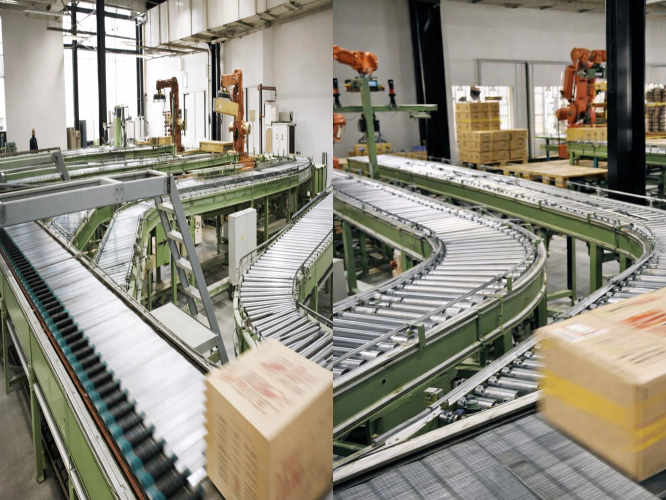
La véritable force d'un réducteur industriel réside dans sa polyvalence. Les produits Ever Power sont au cœur de nombreux systèmes mécaniques complexes. Dans le domaine de la manutention de matériaux en vrac et de l'exploitation minière, nos réducteurs hélicoïdaux haute performance fournissent le couple constant et robuste nécessaire au transport de milliers de tonnes de minerai par convoyeurs terrestres inclinés. Ces environnements exigeants requièrent une maintenance et une étanchéité optimales des réducteurs industriels afin de résister aux poussières abrasives.

Avec la transition vers le monde dynamique et à grande vitesse de la logistique automatisée et des biens de consommation courante (FMCG), les exigences évoluent radicalement. Un réducteur industriel pour machines d'emballage doit offrir une accélération rapide, une précision d'arrêt optimale et un encombrement minimal. C'est pourquoi nous intégrons fréquemment nos gammes de produits de précision. Outre les réducteurs industriels standard, Ever Power fabrique des réducteurs de haute précision. réducteurs planétaires et spécialisé réducteurs pour effecteurs terminaux de robots de précisionCes unités présentent un jeu ultra-faible, garantissant que les bras robotisés et les indexeurs d'emballage automatisés atteignent leurs marques de positionnement avec des tolérances inférieures au millimètre, des millions de cycles par an.
Succès mondial : révolutionner la logistique portuaire aux Pays-Bas
Étude de cas : Terminal à conteneurs automatisé de Rotterdam
Le défi : Un important terminal portuaire automatisé des Pays-Bas subissait des pannes catastrophiques récurrentes au niveau des mécanismes d'entraînement de ses grues. L'environnement marin salé et humide, combiné aux chocs répétés liés au levage de conteneurs de 40 tonnes, entraînait une contamination rapide par l'huile et l'écaillage des dents d'engrenage.
La solution Ever Power : Nous avons conçu un système de réducteur industriel entièrement personnalisé, parfaitement adapté à cet environnement marin. Nous avons opté pour un acier forgé de qualité marine, doté d'un bombage avancé pour absorber les chocs liés au levage. Plus important encore, nous avons mis en place un système d'étanchéité exclusif à plusieurs chambres en taconite, renforcé par un revêtement époxy anticorrosion C5-M. Après 36 mois de fonctionnement continu 24h/24 et 7j/7, les analyses d'huile de routine ne révèlent aucune infiltration d'eau ni aucune particule d'usure métallique. Grâce à l'élimination des temps d'arrêt, le port a pu augmenter son débit horaire de conteneurs de 181 tonnes 300 tonnes.
Ce que disent nos clients internationaux
« Les réducteurs industriels haute performance que nous avons achetés chez Ever Power pour notre installation de concassage ont une durée de vie deux fois supérieure à celle de notre précédent fournisseur européen. Les conseils de leur équipe d'ingénieurs en matière d'analyse vibratoire nous ont évité une panne majeure et imprévue. »
— Markus T., ingénieur de maintenance principal, Allemagne
« Trouver un fabricant capable de produire un réducteur industriel véritablement sur mesure pour nos machines d'emballage spécialisées s'est avéré difficile. Ever Power nous a fourni un réducteur compact à couple élevé qui s'adapte parfaitement à notre espace de montage. »
— Sarah L., directrice de l'automatisation, États-Unis
« La dissipation thermique de ces entraînements est phénoménale. Sous la chaleur torride de l'arrière-pays, nos convoyeurs terrestres nécessitent des réducteurs fiables. Le réducteur industriel d'Ever Power encaisse le couple massif sans broncher. »
— David W., directeur des opérations minières, Australie
Foire aux questions
1. À quelle fréquence dois-je changer l'huile pour prolonger correctement la durée de vie d'un réducteur industriel ?
Pour un réducteur industriel standard à couple élevé fonctionnant dans des conditions normales, une première vidange d'huile est recommandée après les 500 premières heures de rodage. Par la suite, les huiles synthétiques pour engrenages doivent être changées toutes les 10 000 à 15 000 heures de fonctionnement, ou tous les 2 à 3 ans. Cependant, dans les industries fortement polluées comme le secteur minier, la fréquence des vidanges doit être déterminée par l'analyse de l'huile.
2. Où puis-je trouver des solutions de réducteurs industriels sur mesure pour les machines d'emballage aux Pays-Bas ?
Ever Power est spécialisée dans la fourniture et l'ingénierie à l'échelle mondiale. Nous proposons des solutions de réducteurs industriels sur mesure, conçues spécifiquement pour les marchés exigeants et à grande vitesse de l'emballage et de la logistique automatisés, notamment aux Pays-Bas. Nous adaptons les dimensions de montage, les rapports de réduction et les servocommandes à vos plans de machines précis.
3. Quelle est la cause de défaillance la plus fréquente d'un réducteur industriel à engrenages robustes ?
La principale cause de défaillance des réducteurs industriels à engrenages lourds est sans conteste un entretien insuffisant, notamment une lubrification défectueuse et des joints d'étanchéité défectueux. Lorsqu'un joint d'étanchéité cède, le lubrifiant s'échappe et des impuretés pénètrent, formant une pâte abrasive qui détruit rapidement les dents d'engrenage de précision et les roulements. Une surveillance régulière de la température et des vibrations permet d'éviter complètement ce problème.
4. Les réducteurs planétaires sont-ils meilleurs que les réducteurs à engrenages hélicoïdaux industriels standard ?
Tout dépend du contexte d'application. Un réducteur planétaire offre une densité de couple extrêmement élevée et un encombrement réduit, ce qui le rend idéal pour les effecteurs robotiques et les engins mobiles. Cependant, un réducteur industriel à engrenages hélicoïdaux classique offre une dissipation thermique exceptionnelle et est souvent plus économique et plus facile à entretenir pour les applications stationnaires de grande envergure, comme les convoyeurs terrestres.
5. Comment puis-je acheter directement auprès du fabricant de réducteurs industriels Ever Power ?
En vous approvisionnant directement auprès d'Ever Power pour vos équipements de transmission de puissance, vous avez la garantie d'un véritable support technique et de prix compétitifs. Pour une consultation concernant un réducteur industriel standard ou sur mesure, rendez-vous sur notre portail de contact. Nos ingénieurs d'application internationaux vous accompagneront immédiatement dans vos calculs de charge et la modélisation CAO 3D.